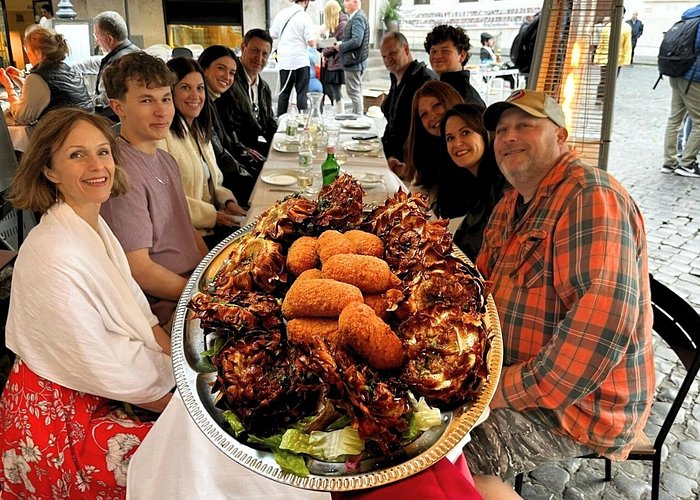
Roman food is one of the great culinary traditions in the world — and one of the easiest to get completely wrong as a tourist. The streets around the main attractions are lined with restaurants designed to capture foot traffic: laminated picture menus, aggressive hosts pulling you inside, and pasta that was cooked three hours ago. Rome deserves better than that.
A good food tour doesn’t just feed you. It teaches you how to read a menu, which neighborhoods to trust, what authentic carbonara actually tastes like, and why Roman cuisine is so different from the Italian food you’ve had everywhere else. This guide compares the four best options for 2026 — from a $55 street food walk to a $148 luxury evening in Trastevere — so you can choose the right one for your trip.
⚡ Quick answer: For the best all-round experience, the Twilight Trastevere Food Tour is the top pick — private wine cellar access, legendary local spots, and an operator (Eating Europe) that consistently delivers. Check availability here →
📋 What’s in This Guide
- What to Eat in Rome: The Essential Dishes
- Rome’s Best Food Neighborhoods
- Tour Comparison Table
- Tour 1: Twilight Trastevere (Top Pick)
- Tour 2: Rome Food & Wine — 3 Districts
- Tour 3: Luxury Trastevere with Fine Wine
- Tour 4: Street Food Tour (Best Budget Option)
- Tips for Getting the Most from Your Food Tour
- Frequently Asked Questions
🍝 What to Eat in Rome: The Essential Dishes
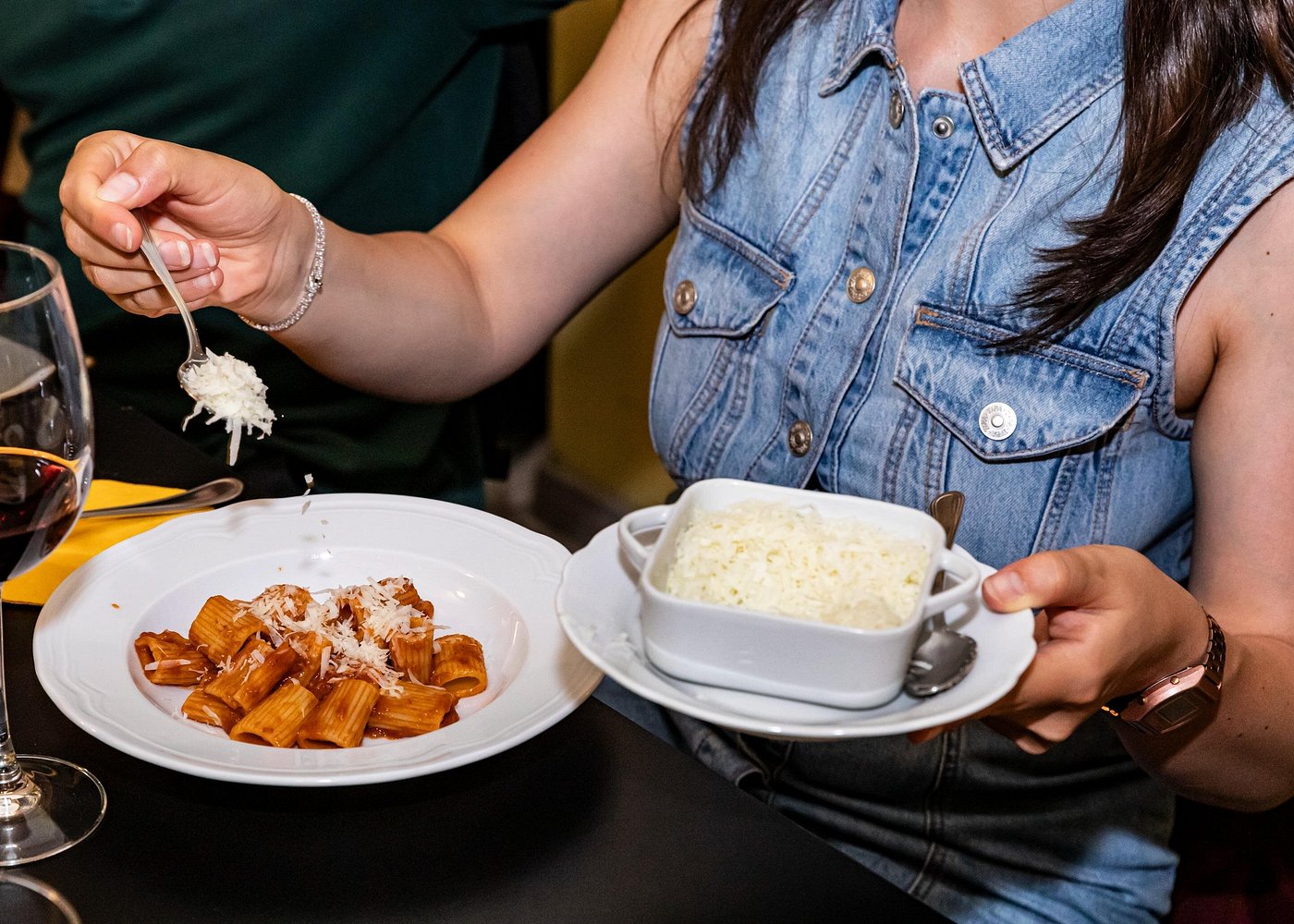
Roman cuisine is hyper-local. Unlike northern Italian cooking, which relies heavily on butter, cream, and risotto, Roman food is built on simple ingredients, cured meats, offal, and pasta made with eggs and hard wheat. Before you go on any food tour, knowing these dishes will dramatically improve the experience.
The Four Pastas of Rome
Roman pasta culture is defined by four dishes, each built around a different combination of just a few ingredients. Any food guide worth their salt will explain the history and technique behind each one.
- Cacio e Pepe — Pecorino Romano cheese and black pepper, emulsified into a silky sauce with pasta water. Sounds simple; requires real technique to do correctly. Most tourist restaurants get it wrong.
- Carbonara — Guanciale (cured pork cheek), Pecorino, egg yolk, and black pepper. No cream. Never cream. The addition of cream is the single most reliable indicator that you’re in a tourist trap.
- Amatriciana — Guanciale, San Marzano tomatoes, Pecorino Romano, and chili. Originated in the town of Amatrice but claimed by Rome as its own over centuries.
- Gricia — The ancestor of all four: just guanciale, Pecorino, and black pepper. The purest expression of Roman pasta cooking, and the least known outside Italy.
Street Food You Need to Try
- Supplì — Rome’s answer to the arancino: a fried rice croquette filled with ragù and mozzarella. Best eaten from a hole-in-the-wall, standing on the street, while it’s still hot enough to burn your fingers.
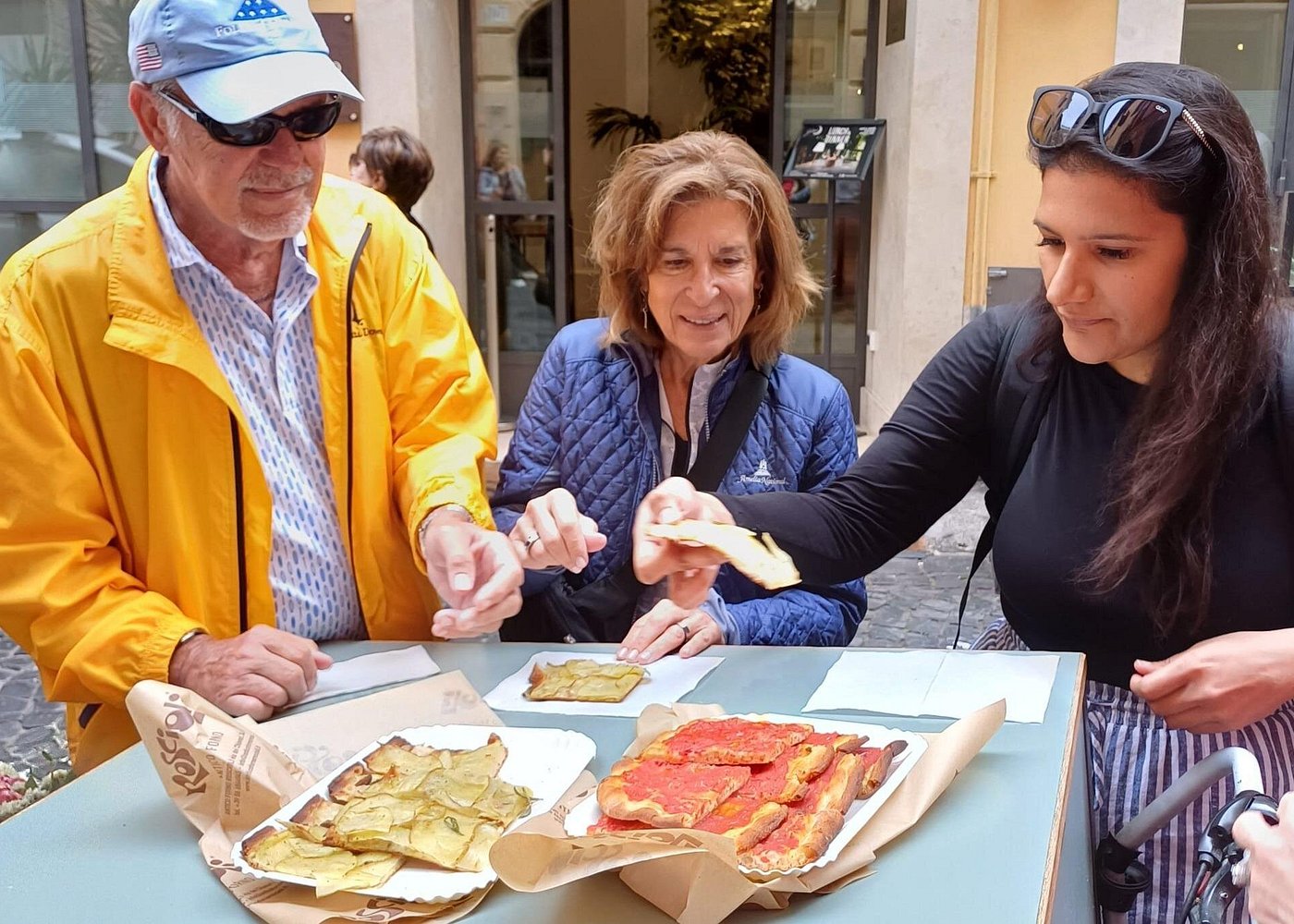
- Pizza al Taglio — Pizza by the slice, sold by weight, cut with scissors. Roman-style pizza has a thin, crispy base unlike Neapolitan pizza. Every neighborhood has its own version.
- Porchetta — Slow-roasted whole pig, heavily seasoned with rosemary, fennel, and garlic. Eaten in a sandwich from a market stall or a roadside van. Testaccio market is the best place to try it.
- Trapizzino — A pocket of pizza bianca stuffed with slow-cooked Roman fillings like chicken cacciatore or oxtail stew. A modern Roman invention that has become a serious local institution.
Drinks & Desserts
- Gelato — The real thing is kept in metal containers with lids, not piled in fluorescent mounds. Look for muted, natural colors. Your food tour guide will show you the difference.
- Maritozzo — A soft, sweet bun split open and filled with an absurd amount of whipped cream. Rome’s traditional breakfast pastry, eaten standing at a bar with an espresso.
- Frascati & Castelli Romani wines — The local wines of Rome come from the Castelli Romani hills south of the city. Light, crisp whites that pair perfectly with Roman pasta. Most tourists never encounter them.
🗺️ Rome’s Best Food Neighborhoods
Where you eat in Rome matters as much as what you eat. The city’s culinary identity is intensely neighborhood-driven — certain dishes belong to certain districts, and locals take this seriously.
Trastevere
The most atmospheric neighborhood in Rome for an evening meal. Trastevere (“across the Tiber”) is a medieval tangle of cobblestone lanes, ivy-covered buildings, and family-run trattorias that have been serving the same recipes for generations. It’s also — inevitably — one of the most touristy areas in Rome. The key is knowing which restaurants are the real ones. A guided food tour is probably the fastest way to learn this distinction.
Testaccio
If Trastevere is Rome’s prettiest food neighborhood, Testaccio is its most authentic. Built around the former slaughterhouse of Rome (il mattatoio), this working-class district gave rise to cucina povera — the cuisine of the poor — which used every part of the animal. Today it’s home to Rome’s best food market, some of the city’s most respected trattorias, and an emerging street food scene. Not all food tours go here, but the ones that do are usually the best.
The Jewish Ghetto (Ghetto Ebraico)
One of Rome’s oldest continuously inhabited neighborhoods, the Jewish Ghetto has its own distinct culinary tradition that predates Roman cuisine as most people know it. Jewish-Roman food is characterized by fried artichokes (carciofi alla giudìa), salt cod (baccalà), and ricotta-based pastries. It’s a cuisine you simply won’t encounter outside this neighborhood, and it’s one of the most compelling food stories in the city.
Campo de’ Fiori
Home to one of Rome’s most famous morning markets, Campo de’ Fiori is a good starting point for food walks — seasonal produce, local cheeses, cured meats, and Roman street food all within a few hundred meters. By evening it transforms into a lively bar scene, making it a natural endpoint for evening food tours.
⚖️ Rome Food Tours 2026: Side-by-Side Comparison
| Feature | 🌅 Twilight Trastevere | 🍷 Food & Wine 3 Districts | 👑 Luxury Trastevere | 🥪 Street Food Tour |
|---|---|---|---|---|
| Starting Price | $123+ | $86+ | $148+ | $55+ |
| Duration | ~3.5 hours | ~3 hours | ~3.5 hours | ~2.5 hours |
| Wine Included | ✅ Yes | ✅ Yes | ✅ Fine wine pairing | ❌ No |
| Neighborhoods | Trastevere | Trastevere + Ghetto + Campo | Trastevere | City center |
| Tastings | 6–8 stops | 15 tastings | Unlimited | 6–8 stops |
| Private Wine Cellar | ✅ Yes | ❌ No | ❌ No | ❌ No |
| Best For | Foodies & special occasions | Cultural immersion | Luxury travelers | Budget travelers |
| Evening Tour | ✅ Yes (twilight) | ✅ Evening slots | ✅ Evening | ⚠️ Various times |
| Book Now | → Book | → Book | → Book | → Book |
🌅 Tour 1: Twilight Trastevere Food Tour — Our Top Pick
This is the tour we recommend without hesitation to anyone visiting Rome who cares about food. Run by Eating Europe — one of the most respected food tour operators on the continent — the Twilight Trastevere tour sets the standard for what a Roman food experience should be.
What Makes It Special
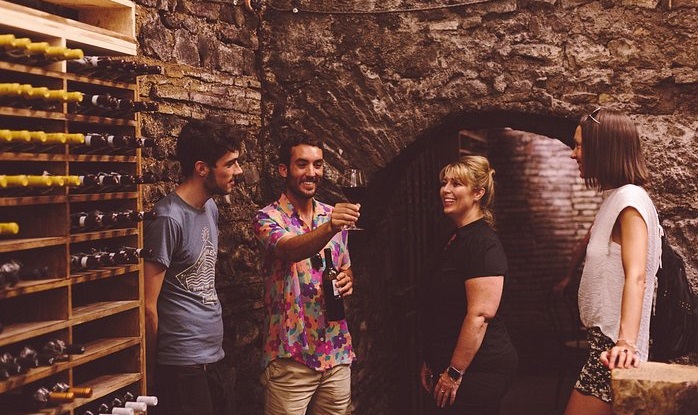
The centerpiece of this tour is access to a centuries-old private wine cellar that is simply not accessible to independent visitors. You’re not just tasting wine — you’re stepping into a space that has been part of Roman food culture for generations, guided by someone who can explain exactly why that matters.
The tour also includes stops at Da Enzo al 29, one of Trastevere’s most respected traditional trattorias, and a series of smaller producers and artisans that don’t show up on any tourist map. This is the kind of insider knowledge that takes years to accumulate — the tour gives it to you in an evening.
What’s Included
- 6–8 food and drink stops across Trastevere
- Private wine cellar visit (exclusive access)
- Roman wine and local craft beers included
- Expert local guide with deep neighborhood knowledge
- Enough food to constitute a full dinner
- Small group for a personal experience
Who This Is For
Anyone on their first trip to Rome who wants to understand the food, not just eat it. Couples celebrating a special occasion. Travelers who’ve been to Rome before and want a different kind of experience. Basically: anyone who takes food seriously.
🍷 Book Twilight Trastevere Tour →
🍷 Tour 2: Rome Food & Wine — 3 Districts (Best for Cultural Immersion)
If one neighborhood isn’t enough, this tour covers three of the most distinctive food districts in Rome in a single evening: Trastevere, the Jewish Ghetto, and Campo de’ Fiori. With 15 tastings across three neighborhoods, it’s the most comprehensive food overview available in a single tour.
Why Three Neighborhoods Matter
Each of these districts has a completely different food identity. Trastevere is Roman comfort food — pasta, wine, Roman-Jewish fusion. The Jewish Ghetto is one of the oldest food traditions in Europe, with dishes that date back 2,000 years. Campo de’ Fiori is market culture and aperitivo hour. Together, they give you a more complete picture of Roman food than any single-neighborhood tour can offer.
What’s Included
- 15 food and drink tastings across 3 neighborhoods
- Wine pairings included throughout
- Jewish-Roman specialties (carciofi alla giudìa, baccalà)
- Traditional Roman pasta and street food
- Expert licensed guide
- Approximately 3 hours walking and eating
The Trade-off
Because the tour covers more ground, each stop is slightly shorter than on a single-neighborhood tour. If you want depth and intimacy over breadth, the Twilight Trastevere tour is the better choice. But if this is your only evening free and you want the widest possible taste of Rome, this is the one.
🗺️ Book the 3-District Food & Wine Tour →
👑 Tour 3: Luxury Trastevere — Unlimited Fine Wine Pairing
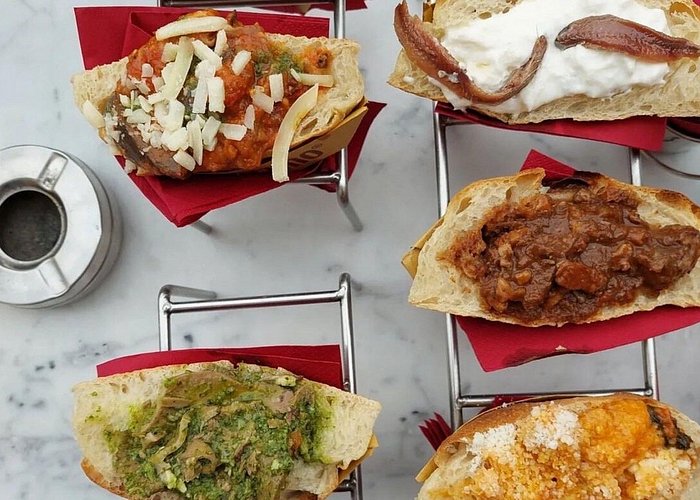
This is the premium option — and it earns that label. While the other tours are generous with food and drink, the Luxury Trastevere tour is built around fine wine pairing at every stop, with no limits on portions. If you’re celebrating something, or simply want the best possible evening Rome can offer, this is it.
What’s Included
- Full evening food tour through Trastevere
- Fine wine pairings at every stop — unlimited
- Premium local ingredients and artisanal producers
- Expert guide with sommelier-level wine knowledge
- Small group, intimate atmosphere
- Enough food and wine to replace dinner entirely
Who This Is For
Wine lovers. Couples on honeymoon or anniversary trips. Anyone for whom the evening meal is the centerpiece of the travel experience rather than an afterthought. At $148+, it’s a splurge — but a considered one, especially compared to what a dinner with comparable wine at a good Roman restaurant would cost.
👑 Book Luxury Trastevere Tour →
🥪 Tour 4: Rome Street Food Tour — Best Budget Option
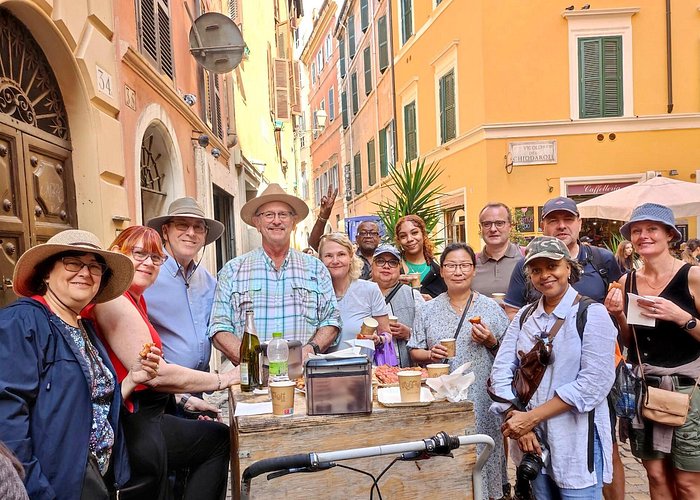
Not every great food experience in Rome requires a sit-down dinner. Roman street food is a serious culinary tradition in its own right — supplì, pizza al taglio, porchetta, trapizzino — and this tour is built entirely around it. At $55+, it’s the most accessible option on this list, and for travelers on a tighter budget it delivers excellent value.
What’s Included
- 6–8 street food stops through central Rome
- Local guide with neighborhood expertise
- Supplì, pizza al taglio, gelato, and more
- Insight into Roman food culture and history
- Self-paced, casual format — less structured than the sit-down tours
Important Note
⚠️ Wine is not included on this tour. It’s a daytime or early-evening experience focused on street food rather than restaurant culture. If wine and sit-down tastings are important to you, one of the three tours above is a better fit.
Who This Is For
Budget-conscious travelers. Families with kids (street food is more kid-friendly than a formal sit-down). Travelers who’ve already done a dinner food tour on a previous visit and want a different angle. Anyone who just wants to eat well without committing to a full evening.
💡 Tips for Getting the Most from Your Rome Food Tour
Come Hungry — Genuinely Hungry
This is not a light snack experience. The evening food tours are designed to replace dinner, with enough food across 6–15 stops to leave you completely full. Eat a light lunch and skip the afternoon snack. Showing up full is one of the most common mistakes first-timers make, and it means you’ll be turning down food halfway through.
Book It Early in Your Trip
The single best piece of advice for any food tour: do it on your first or second evening in Rome, not your last. Why? Because your guide will teach you which restaurants to trust, which neighborhoods to eat in, what to order, and what to avoid. That knowledge transforms every meal for the rest of your trip. Saving it for the final night means you’ve spent the whole holiday eating blind.
Ask About the Wines
Roman wines are largely unknown outside Italy, and that’s a shame. The local whites from the Castelli Romani hills — Frascati, Marino, Velletri — are crisp, mineral-driven, and designed specifically to complement Roman food. Ask your guide about the grapes, the producers, and why these wines work so well with the local cuisine. You’ll drink differently for the rest of the trip.
Let Your Guide Teach You the Gelato Test
Fake gelato — the kind piled in enormous fluorescent mounds — is everywhere near tourist attractions. Real gelato is kept in covered metal containers, has natural muted colors, and doesn’t hold its shape in dramatic peaks. Your food tour guide will almost certainly explain this, but if they don’t, ask. It will save you from a series of disappointing desserts for the rest of the trip.
How to Spot a Tourist Trap Restaurant on Your Own
Your food tour will give you the insider knowledge, but here’s a quick checklist for when you’re eating independently: avoid any restaurant with a host standing outside actively inviting you in; avoid laminated picture menus; avoid any place that lists “spaghetti bolognese” (not a Roman dish) prominently; and avoid restaurants within 200 meters of the main monuments. Walk two or three streets further and the quality and price both improve dramatically.
Dress Comfortably — You’ll Be Walking
Most food tours cover 3–5 kilometers on foot across cobblestone streets. Comfortable shoes are not optional. The same cobblestone advice from the Colosseum applies here: Roman streets are beautiful and uneven in equal measure.
❓ Frequently Asked Questions
Are Rome food tours worth the money?
Yes, especially for first-time visitors. A good food tour costs $55–$150 but includes enough food and drink to replace a full dinner, plus the kind of local knowledge that takes years to accumulate independently. The practical tips alone — which restaurants to trust, what to order, which neighborhoods to avoid — improve every subsequent meal of your trip.
How much food is actually included?
On the evening tours (Twilight, Food & Wine, Luxury), there is enough food across 6–15 stops to constitute a full dinner. Come hungry. The street food tour is lighter — more of a substantial afternoon snack than a complete meal replacement.
Which tour is best for a couple on a special occasion?
Either the Luxury Trastevere tour (unlimited fine wine pairings, intimate atmosphere) or the Twilight Trastevere tour (private wine cellar access). Both are excellent for a romantic evening. The Twilight tour has the edge for sheer memorability; the Luxury tour wins on wine quality.
Are food tours suitable for vegetarians?
Most operators accommodate vegetarians with advance notice. Roman cuisine is meat-heavy, but the vegetarian options are genuinely excellent — artichokes, pasta, pizza, supplì, pastries. Contact the operator directly when booking to confirm they can cater to your requirements.
What is the best food neighborhood in Rome?
Trastevere is the most atmospheric. Testaccio is considered the most authentically Roman by locals. The Jewish Ghetto has the most unique culinary tradition. If you can only pick one, Trastevere is the most accessible starting point — but a tour that covers multiple neighborhoods gives you the fullest picture.
Is carbonara with cream acceptable in Rome?
Absolutely not. Authentic carbonara has no cream — just guanciale, Pecorino Romano, egg yolk, and black pepper. Cream in carbonara is a reliable sign that a restaurant is cooking for tourists rather than Romans. Your food tour guide will almost certainly address this directly, and with some passion.
How far in advance should I book?
The Twilight Trastevere tour sells out fastest — book 2–3 weeks ahead during spring and summer. The other tours have more availability but 1–2 weeks advance booking is always recommended during high season (April–October).
Ready to Eat Rome Like a Local?
The difference between a forgettable meal in a tourist trap and a plate of carbonara that you’ll still be talking about in five years is almost entirely about knowing where to go. A food tour solves that problem in a single evening — and teaches you how to navigate the rest of your trip.
Pick the tour that fits your budget and appetite, book it for your first or second night, and let the eating begin.
🌅 Twilight Trastevere → |
🍷 3 Districts → |
👑 Luxury → |
🥪 Street Food → |